
FACT FILE: BEETROOT
No meal is complete without the rich, earthy flavour of beetroot . Let’s dig in and discover more about this versatile staple! Read on for information about their health benefits, key nutrients, and suggestions for cooking, usage, and storage.
-
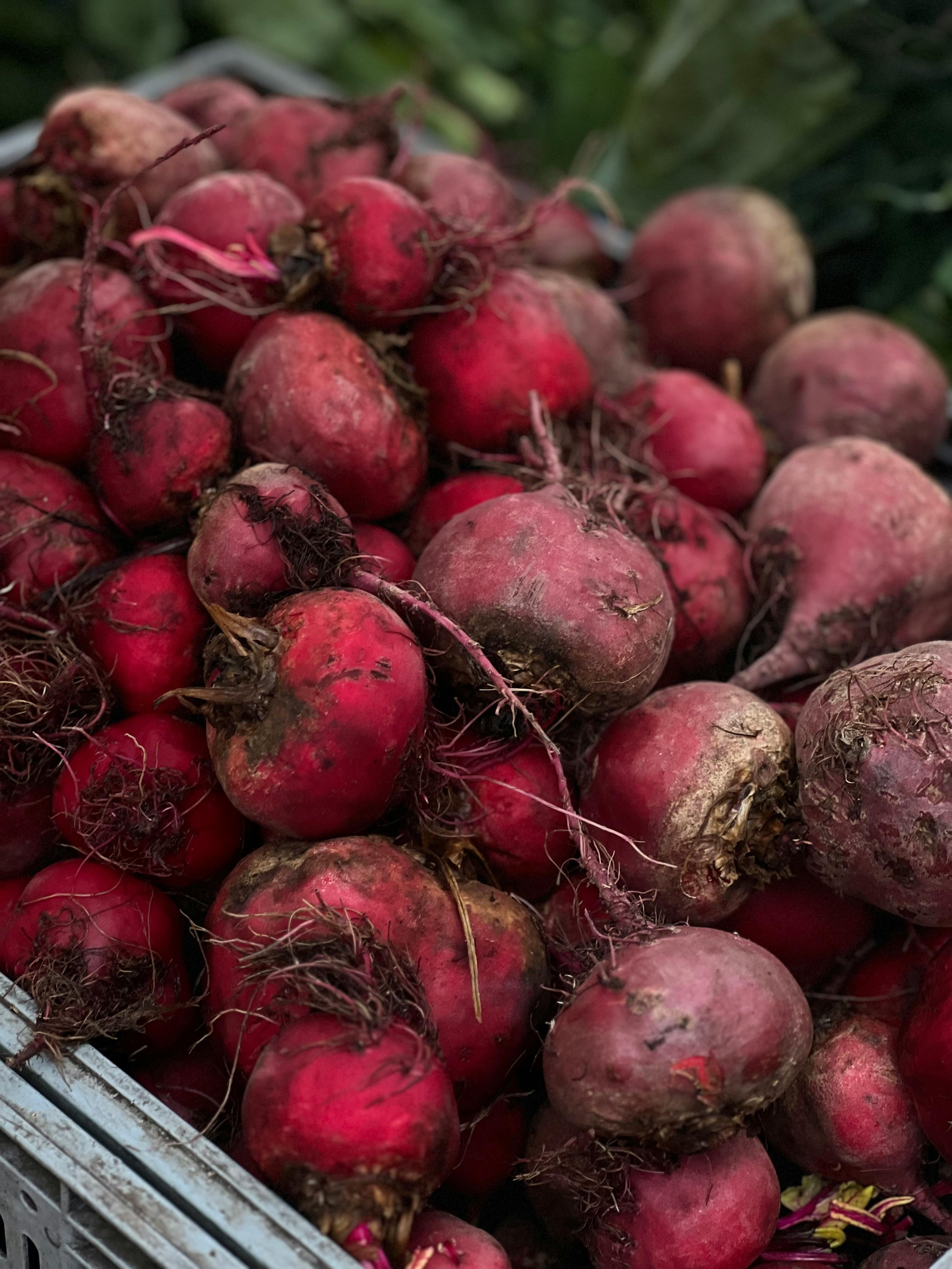
Beetroots come in a variety of colours: deep red, golden yellow, striped (Chioggia), and even white.
They are the Beetroots come in a variety of colours: deep red, golden yellow, striped (Chioggia), and even white.
They are the root of the beet plant, with leafy greens that are also edible and nutritious.
Beetroots are naturally sweet and earthy in flavour. Cooking can enhance sweetness, while raw beets are crisp and slightly bitter.
Most beetroots are round or oval, with firm skin and a smooth texture. Some varieties are smaller and ideal for roasting whole.
Beetroots contain natural pigments called betalains, which give red and golden beets their vibrant colour. Betalains have antioxidant and anti-inflammatory properties.
Beetroots also provide dietary fibre, folate, potassium, and Vitamin C, supporting overall health., with leafy greens that are also edible and nutritious.
Beetroots are naturally sweet and earthy in flavour. Cooking can enhance sweetness, while raw beets are crisp and slightly bitter.
Most beetroots are round or oval, with firm skin and a smooth texture. Some varieties are smaller and ideal for roasting whole.
Beetroots contain natural pigments called betalains, which give red and golden beets their vibrant colour. Betalains have antioxidant and anti-inflammatory properties.
Beetroots also provide dietary fibre, folate, potassium, and Vitamin C, supporting overall health.
-
Beetroots have a naturally sweet, earthy flavour that intensifies when roasted, steamed, or boiled. Raw beetroot is crisp with a slightly earthy bite.
Red, golden, and striped beetroot varieties have subtle differences in sweetness and earthiness: golden is milder and sweeter, Chioggia striped is delicate and slightly candy‑like, red is richer and more earthy.
Beetroot can be roasted whole, diced, or sliced, boiled, steamed, grilled, pickled, juiced, or eaten raw in salads and slaws.
The leaves, called beet greens, are edible, slightly bitter, and delicious sautéed, steamed, or added to soups and stir-fries.
To maintain the vibrant colour of red beetroot, avoid overcooking; golden and striped varieties are less prone to colour loss.
Beetroot pairs well with citrus, goat cheese, nuts, olive oil, balsamic vinegar, garlic, and herbs.
For a simple lunch dish: slice beetroot thinly, drizzle with olive oil and a sprinkle of salt, roast for 20–30 minutes, then toss with feta and baby spinach.
-
Choose beetroots that are firm, smooth, and heavy for their size, with vibrant colour and no soft spots or blemishes.
Smaller to medium-sized beetroots tend to be sweeter and more tender than very large ones.
If buying with the greens attached, look for fresh, crisp leaves and trim them before storing. Beet greens draw moisture from the roots.
Store beetroot unwashed in the refrigerator crisper drawer in a perforated bag or wrapped loosely in paper to reduce moisture build-up.
Beetroot can stay fresh for 2–3 weeks in the fridge; trimmed greens should be used within 2–3 days.
For longer-term storage, beetroot can be blanched, cooled, and frozen in airtight containers.
Avoid storing beets near ethylene-producing fruits (like apples and bananas) as it can accelerate spoilage.
Raw beetroot can also be kept at cool room temperature for a short period, but refrigeration is preferred for maximum freshness.
-
One serve of beetroot is 75g, which is about ½ a medium beetroot.
Beetroot is a source of dietary fibre, folate, potassium, and Vitamin C, all of which contribute to overall health.
As a source of folate, one serve of beetroot supports:
Healthy growth and development
Normal red blood cell formation
A healthy nervous system
As a source of potassium, beetroot contributes to:
Healthy muscles and nerves
Maintaining normal blood pressure
Dietary fibre in beetroot supports healthy digestion and can help with feelings of fullness.
Beetroot’s betalain pigments have antioxidant properties, supporting cells against oxidative stress.
Beet greens are also nutrient-rich, providing vitamins A, C and K, calcium, and iron.
-
Betalains – These natural pigments give red and golden beets their vibrant colour. Betalains have antioxidant and anti-inflammatory properties, supporting overall cellular health.
Carotenoids – Found mainly in yellow and golden beets, carotenoids such as beta-carotene support eye health and act as antioxidants.
Polyphenols – Beetroot contains polyphenols, including flavonoids and phenolic acids, which help protect cells from oxidative stress.
Nitrates – Naturally occurring dietary nitrates in beetroot can help support healthy blood pressure and circulation.
Chlorophyll – Present in green beet greens, chlorophyll has antioxidant activity and may support detoxification processes in the body.
Vitamin C – Acts as a phytonutrient and antioxidant, helping protect cells and supporting a healthy immune system.